

A Complete Guide to Canva Premium Licensing

Canva has solidified its position as a top-tier graphic design platform. Its free version grants users access to robust features and a wide array of royalty-free visuals. However, the true value lies in its premium subscription, which unlocks advanced capabilities and provides users with a license to use media assets without any royalties. This comprehensive guide delves into the platform's licensing options, pricing model, and key features that are crucial for anyone considering an upgrade.
Overview of Canva and the Premium Subscription
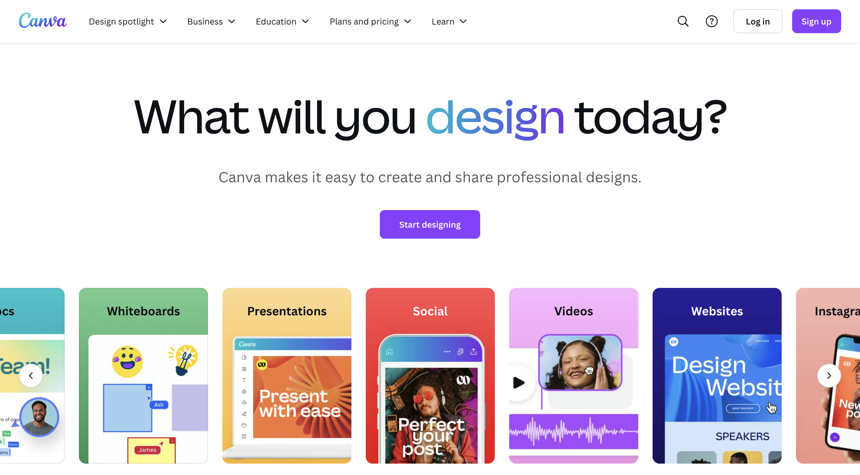
Canva is a top-tier graphic design platform that offers a seamless user experience. It features an easy-to-use drag-and-drop interface, an extensive library of templates, and access to high-quality stock images, videos, and elements.
What sets Canva apart is its unique approach—instead of relying on third-party content providers, the company owns all the media available on the site. This comprehensive solution empowers individuals and businesses alike to effortlessly create visually stunning graphics in no time at all, regardless of their level of expertise.
Unlock the full potential of your design projects with a Canva Pro subscription. While the free version provides basic editing tools and a selection of templates, photos, and graphics, upgrading to Canva Pro gives you access to advanced design features, premium images, and templates for creating professional-quality content. Elevate your visual creations with team collaboration options and brand kit customization capabilities catering to businesses and individuals seeking top-tier visual assets.
What's distinctive about Canva Pro is its licensing agreement – all premium assets are covered under the Canva Pro license, offering broad usage rights for personal and commercial purposes. Dive into the world of Canva Pro to discover more about its licensing details and usage rights today!
Canva's Licensing Options
Understanding the licensing agreements is crucial when it comes to utilizing Canva assets for your designs. Whether you opt for a free or pro license, it's essential to familiarize yourself with the terms of each agreement to ensure that you select the right option and use your designs appropriately.
Below is a summary of the available licenses:
Free License
Canva's free content license enables the personal and commercial use of designs containing Canva assets across digital and physical mediums. It also allows for the use of single-client work. Restrictions include no reselling or redistribution and not using the assets independently (they can only be used in a design created on the platform). Free use demands attribution. It is also a one-design-only license, meaning if you wish to use the same visual in another project, you must re-download it from the platform to obtain a new license.
It's worth noting that this site offers several other free licenses. The company integrates images from Pixabay and Pexels (two stand-alone free image libraries owned by Canva) with their own terms of use. You may also find Creative Commons Zero (CC0) and Public Domain content, which are governed by the terms of those contracts. This makes using free content at Canva more complex than initially appears, as you must first check which of all the free use contracts applies to your selected element, and then see what that contract allows you to do and what requirements it introduces.
Pro License
This license grants users the right to access and use premium design assets for personal and commercial projects. Users can create, modify, and distribute content using a vast library of high-quality premium templates, stock photos, videos, graphics, illustrations, fonts, and other design elements. The Pro License enhances creative flexibility while maintaining compliance with Canva’s terms of use.
By subscribing to Canva Pro, users can generate professional marketing materials, advertisements, business branding, social media content, presentations, and more. These assets provide users with an efficient and polished approach to design while eliminating the need for additional attribution.
Do’s:
✔ Use for commercial and personal projects – With Canva Pro, you have access to premium assets that can elevate your designs for personal use, business endeavors, or client-related projects. This includes creating branding materials, advertisements, and engaging social media campaigns
✔ Unlimited reproduction and merchandise included – With the premium licensing agreement, you will have unlimited access to reproduce and merchandise included in your design projects. The terms are incredibly flexible, allowing for an unrestricted number of reproductions and views. You also have the unique opportunity to use assets as part of products intended for resale – a right that most other providers reserve for extended licenses
✔ Modify and customize designs – Users have the ability to modify templates, images, and elements extensively to suit their needs, including altering colors, text, and layouts for a unique design
✔ Utilize without attribution – Unlike Canva’s free assets, premium elements included in a Canva Pro subscription do not require users to credit Canva or the original creators. With a Canva Pro license, you have access to professional design tools and high-quality resources without the need for any attributions. This is perfect for businesses, students, or anyone looking to create top-notch content without any restrictions on usage.
Don’ts:
✘ Resell or redistribute unmodified assets – Canva Pro elements cannot be sold or distributed as standalone files without significant modification. It is crucial to note that you are not permitted to license out or distribute unchanged assets from Canva Pro. This includes stock images, templates, and videos. These items must undergo substantial alterations before being resold or shared independently
✘ Use for trademarks or logos – Canva Pro assets cannot be licensed or copyrighted as part of a business logo or brand identity
✘ Misrepresent assets – Users cannot claim Canva Pro licenses as their own original work or imply exclusive rights over them
Like Canva’s free license, Pro assets are one-design-only, meaning they can be used as part of one completed visual created within Canva; any new use of that asset or that design –even resizing the same design in a new dimension– requires a new license, which you obtain by re-downloading from the platform. Adhering to these guidelines ensures the proper and responsible use of premium Canva content.
Canva Pricing Structure
The cost of premium licenses is designed to be competitive while offering substantial value. The most convenient option is the Pro subscription. Users can select between monthly and annual payment options, with the latter providing a discount. Here’s a quick overview of the pricing:
Here’s a table summarizing Canva Pro Pricing options:
| Plan | Pricing | Features | Best For |
|---|---|---|---|
| Monthly Subscription | $15 per month | Full access to premium templates, images, and elements Unlimited downloads of Pro-licensed content Magic Resize, Brand Kit, Background Remover Team collaboration tools | Users who prefer flexibility and do not want to commit to a long-term plan |
| Yearly Subscription | $120 per year ($10/month) | Same features as monthly plan but at a 33% discount Cost-effective for long-term users | Businesses, freelancers, and frequent designers who want cost savings |
| Canva for Teams | Starts at $120/year per person | Everything in Canva Pro Team management and collaboration tools Workflow approvals and shared Brand Kit | Teams, agencies, and organizations needing collaboration features |
| On-Demand Purchases | $1 per Pro asset | Pay-per-use option for individual Pro assets Available for users on the free plan | Occasional users who only need a few premium assets |
Both subscription options grant full access to all premium features and unlimited downloads of pro-licensed content. This is convenient because premium assets are one-design-use, and even resizing a design requires a new license.
Additionally, you can pay for each Pro asset you add to your design on demand. While the individual cost is low, it can add up quickly, which is why the subscription, with its unlimited downloads, makes a lot more sense in the long term.
For more information, read our Canva pricing breakdown.
Canva Pro Free Trial
The Canva Pro free trial allows users to explore premium features and licensing for a limited time at no cost. During the trial, users can access Canva’s full library of premium templates, stock photos, videos, design elements, advanced tools like background remover, and brand kits. Any assets downloaded during the free trial come with a Pro license, under the same terms as paid Pro subscribers. However, if the subscription is not continued after the trial, users lose access to Pro features, but previously downloaded assets remain licensed.
You can find all details on how to activate your trial here.
Benefits of Canva Pro Licensing
The Pro License offers several benefits over the free one. Here are the key advantages:
- Access to High-Quality Content – Canva Pro users can access 100+ million premium stock photos, videos, audio, and graphics, while free users are limited to basic assets
- Broad Commercial Use Rights – Pro users can use premium content for commercial projects like marketing materials and business branding at any scale. Free users may face restrictions on commercial use for certain assets
- Products for Resale Included – The Pro license enables the use of assets in the design of a product you will resell for profit, such as merchandising or electronic items. Most other stock image providers offer this right as an Extended license, for a higher cost, but Canva includes it in its standard agreement
- No Attribution Required – Free users must credit Canva for some assets, while Pro users can use premium content without attribution
- Resale & Redistribution Rules – Pro users can create and sell designs incorporating premium assets if the elements are significantly modified. Free users cannot sell designs containing premium content without purchasing a license separately
Overall, Canva Pro provides greater freedom and commercial licensing rights, making it ideal for businesses and professionals.
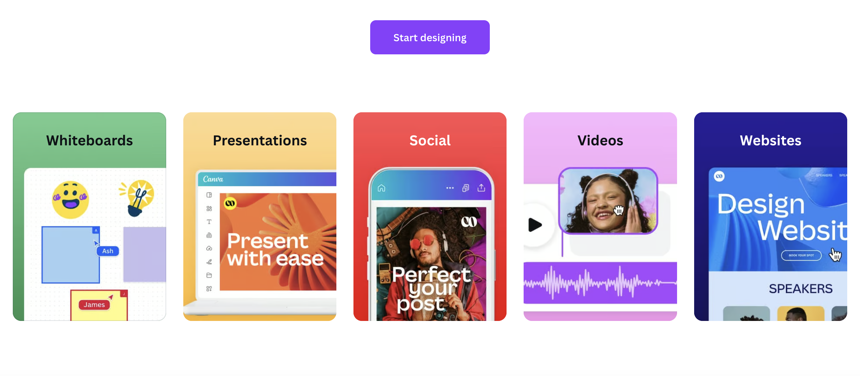
Features Included in Canva Premium
In addition to the broader license coverage, Canva Pro offers a variety of features that enhance the user experience and streamline the design process. Here are some of the standout features:
| Feature | Description | Benefits |
|---|---|---|
| Brand Kits | Create folders to store your brand's logos, colors, and fonts, and instantly apply them to new designs | Ensures brand consistency across all designs |
| Magic Resize | Resize designs for different platforms with one click | Saves time and effort when adapting content for various formats |
| Magic Studio | A suite of AI-powered tools, including one-click background removal, text-to-image generation, and object removal and replacement | It expand creative possibilities without requiring learning skills |
| Unlimited Folders | Organize your designs into unlimited folders | Improves workflow and makes it easier to find projects |
| Collaboration Tools | Invite team members to collaborate on designs in real-time | Facilitates teamwork and improves project efficiency |
For more details, check our in-depth Canva Pro review.
How to Upgrade to Canva Premium
Upgrading to Canva Pro is a simple process. Follow these steps:
- Log into your Canva account or sign up for one on their website
- Go to the Pricing Page. Click on your profile icon and select “Billing & Plans,” or visit the site's pricing page
- Choose a Subscription Plan. Select monthly or annual billing
- Enter Payment Details. Add a valid payment method
- Confirm and Subscribe. Click “Upgrade” and enjoy Canva Pro’s features immediately
Note: If you started a free trial, you can simply keep your account active. Once the trial period ends, you will be automatically upgraded to a paid subscriber, and you will keep all your download and design history.
Comparison Between Canva Free and Canva Pro
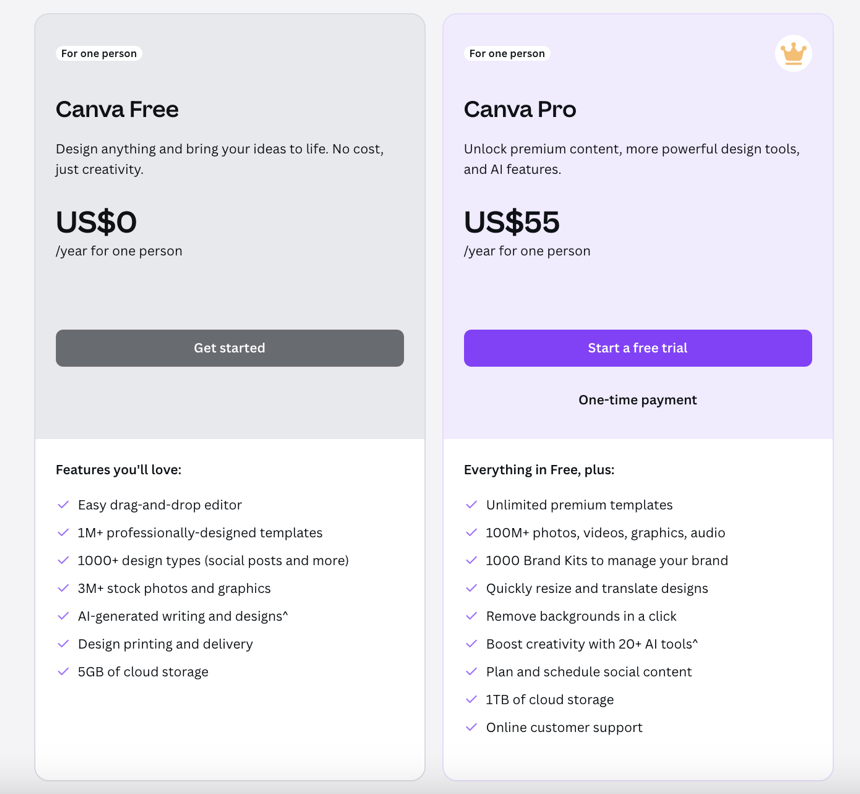
Canva Free and Pro services offer an intuitive design experience with access to thousands of templates, essential design tools, and collaboration features, and both licensing models allow personal and commercial use.
However, Canva Pro is far superior due to its premium features and licensing benefits. Pro users gain access to millions of premium assets and advanced editing tools; Pro license also removes the need for attribution and extends usage rights, allowing for seamless commercial use. For businesses and professionals, Canva Pro offers unmatched value and creative freedom.
For a deeper comparison between these options, read our Canva Free vs Pro analysis.
Pros and Cons of Canva Premium License
Before making a decision, it's important to weigh the advantages and disadvantages of the premium coverage. Here’s a breakdown:
| Pros | Cons |
|---|---|
| Premium quality assets | One-time-use coverage; requires re-downloading for multiple usage |
| Expanded commercial use rights | Cost can add up quickly for casual users without a subscription |
| No attribution required | |
| Flexible modification and customization of assets |
Tips for Maximizing the Use of Canva Premium
When deciding whether to upgrade to the premium version, consider the following key points:
- Leverage Brand Kits – Store your brand’s colors, fonts, and logos in one place for quick and consistent branding across all designs
- Use Magic Resize – Instantly resize designs for different platforms without having to recreate them from scratch
- Organize with Unlimited Folders – Keep projects structured by sorting designs into unlimited folders for easy access
- Collaborate in Real-Time – Invite team members to edit, comment, and refine designs together for seamless teamwork
- Take Advantage of Premium Assets – Utilize high-quality stock photos, videos, and templates to elevate your content
- Batch Create Social Media Content – Design multiple posts at once using templates and batch scheduling for efficiency
- Explore Advanced Editing Tools – Use background remover, animation effects, and transparency adjustments for professional results
- Download Designs in High Resolution – Export graphics in PNG, PDF, or SVG formats for print and digital quality
- Utilize the Free Trial Wisely – Test premium features before committing to a paid plan
Key Takeaways
Here are the core points to remember from this guide:
-
- Canva Pro Enhances Design Capabilities – The premium subscription offers advanced tools, an extensive library of templates, stock images, videos, and elements for professional-quality projects
- Pro License Grants Broad Usage Rights – Unlike the free license, Canva Pro allows for personal and commercial use, unlimited reproductions, and use in resale products with significant modifications
- Free vs. Pro Licensing Differences – Free assets require attribution and have restrictions, while Pro assets offer more flexibility without attribution requirements
- One-Design-Only Rule – Both free and Pro licenses require re-downloading assets for each new design use, including resizing
- Pricing Structure – Canva Pro offers monthly ($15) and yearly ($120) subscriptions, providing access to all premium features and unlimited downloads
- Free Trial Includes a Pro License – Assets downloaded during the free trial retain their Pro license, even if the subscription is not continued
- Pro License Restrictions – Users cannot resell or redistribute unmodified assets, use them in trademarks or logos, or falsely claim ownership of Pro assets
- Canva Pro Offers Exclusive Features – Features like brand kits, Magic Resize, unlimited folders, and collaboration tools enhance the design process
- Flexibility in Commercial Use – Pro users can use assets for marketing materials, advertisements, and business branding without additional licensing fees
- Upgrading to Canva Pro is Simple – Users can switch from the free plan to Pro by subscribing through the Canva platform, with options for monthly or annual payments
Enjoy Extensive Usage Rights and Premium Features with a Pro License
In conclusion, Canva's premium licensing provides a wealth of features and resources that can significantly enhance your visual strategy. By understanding the licensing options, pricing structure, and key features, you can make an informed decision about whether this subscription is right for you. Whether you're a professional designer or a casual user, the usage terms available in the premium version can help you publish stunning visuals with peace of mind.
As you consider your options, remember to weigh the pros and cons, assess your design needs, and explore the features that will best support your creative endeavors. With the right tools at your disposal, you can elevate your design projects to new heights.



Hi Ivanna, thank you for the detailed piece. It’s very helpful. What if I create an image with several different stock photos? The pixel limit for online publication doesn’t apply then, right?
Hi Anjali, we are not Canva representatives so my answer is for orientation only, you will need to contact Canva directly to verify this and I advise you to do so. But to answer your question, the pixel count limit in online publications refers specifically to unedited images, that is, using a photo exactly as it was downloaded from Canva. If you create a design in Canva using several stock images, that would imply the images have been edited by you, and thus the pixel count limitation would not apply. Even if you use only one image, as long as it’s been edited/customized, that limitation is removed. Hope this helps!
Hi, I have a question on how to access the liscense its self? I need it to be able to repot a page using my content illegally.
Hi Maggie, do you mean how to access the Canva license terms? If so, you can access it by clicking right here. Hope it helps!
Hi! There’s confusion about the Canva pro license in a facebook group I am in for folks who develop downloadable content for commercial use (like Etsy). Can you comment on the section under prohibited use that says: use or display the Content in an electronic format that enables it to be downloaded, exported or distributed via mobile devices or shared in any peer-to-peer or similar file sharing arrangement. Thanks!
Hi Jeanne, we are not Canva and we don’t represent them so I strongly advise you to verify this with Canva directly. But, for information purposes only and from our interpretation of their license, that point you mention refers to the images as standalone (this is, just the stock photo/stock graphic element from Canva library), not to a design created using Canva/Canva elements. You cannot ever make a stock photo obtained through Canva available for others to download or share as is. I don’t have the particulars about whether you can sell designs containing Canva content on Etsy (this you will need to check with Canva directly, as I mentioned), but as far as I understand you can use the Canva editor to create designs for sale. Hope this helps a bit!
Can I use an unaltered, standalone image as a social media post if I have the Canva Pro account? Or does there HAVE to be some sort of design element included for the license to be valid?
Hi Nicole. That is a very good question. All images you use have to be part of a design made with Canva, the license doesn’t allow standalone uses of images.
Do keep in mind, that a design doesn’t have to have a lot of design elements – even adding a filter or a small logo, a colorful border, etc., would suffice. As long as you created it on the Canva Editor and exported it/published it from there, you will be covered.
Disclaimer: We are not Canva representatives or lawyers, this answer is for information only. We encourage you to contact Canva directly to verify the info.
Hope this helps!
Has this been updated to reflect the new TOS effective July 18, 2022? Thanks!
Hi Michele, are there particular updates you are curious about on Canva’s license?
Can the stock videos from Canva be used for a monetized YouTube channel?
Hi there, I always recommend asking this to Canva directly. But when I checked their license, I think you can use it to monetize the video on Youtube. You might want to check the audio or music used; there are some limitations where (which you can find in their license written).
If i am using a canva pro photo on an ebook and print cover and i cancel my canva pro subscription do i need to stop selling the ebook or print copy?
Hi Lisa, the Canva Pro license is perpetual, this means the license for photos you downloaded and used in a design while your plan was still active, is still valid even after your plan ends. You may continue using those photos in your ebook and print copies according to the license agreement terms, just remember three things:
1. You cannot use those photos in any new designs. To do that, you would need to re-download the images from Canva directly (and pay for them again).
2. If you are using the images as stand-alone in the ebook, the pixel count limitation from Canva’s terms still applies.
3. Any images you downloaded within your plan but did not use in a design at the time of cancellation of your subscription, are voided. You cannot use those images if your plan is not active, and you must delete the files.
Hope this helps!
Hi, thanks so much for this article. As a Canva Pro user, I want to sell digital prints but I’m not sure what suffices as a non-standalone design. What needs to be changed so that I’m safe in selling them?
Hi Kait, as we are not Canva representatives, my best advice is for you to contact Canva directly and verify this with them. But, from the best of my knowledge, the only way to legally use Canva content (Pro or free) is to download a design from the image editor. As long as you select an image, put it on the editor’s canvas, and perform any kind of edits on it (be it cropping, adding a filter, or text, etc.), and then export it using the download button, this should constitute a Canva design and comply with the license terms. Again, please check with Canva directly to make sure you’re in the clear with your intended use.
Hope this helps!
Hi there,
I want to use a Canva design for my album cover (for professional use on Spotify & Apple Music). I have made a few adjustments to the font and image (mainly just edited the colour). Am I safe to do use this design for these purposes?
Many thanks,
Hi Fauvian, we are not Canva representatives so my answer is for orientation only. But as long as you have made changes to the image (no matter how small) and it’s a design downloaded from Canva (not just an image but a design containing it), your intended use should be covered. I recommend you contact Canva directly to verify, though, as it’s the safest option.
Hope this helps!
If I have an active plan, and I use photos and templates to design images for my business website and social media, and at some point in the future I cancel the plan, will those images (including canva pro stock photos) still be available on my website and social media without a watermark? i.e. do I still retain the use of photos used in a design that I have already published to my website or social media before cancelling the plan?
Second unrelated question, can I use the pro templates and make modifications to the design including the images (while I have an active plan)? i.e. must I use the images “as is”? I have changed some of the images (resizing and recoloring, also changing text fonts) that I plan to use for my logo (I understand I cannot trademark the logo)
Hi Anne, first of all, I remind you that we are not Canva representatives, so this answer is for orientation only. We recommend you to contact Canva directly to verify this. Onto your first question, the Canva Pro license is perpetual so once you use the photos or template in a published design, it is yours forever, meaning you will continue to have those designs available even after your subscription ends. Do keep in mind, you will not be able to re-use that Canva content in any other designs (that would require a new license).
As for the second question, it is our understanding that you are allowed to modify all aspects of templates and images as much as you like –complying with the license terms–. In fact, if you use the images “as is” there are more restrictions than if you alter them. So, resizing, recoloring and changing fonts, all should be perfectly acceptable edits to Canva images.
Hope this helps!
Hi there,
I am working on a book (to be sold as printed item) and using Canva graphics with pro. If I were to put a copyright on my work, would I have to include a disclaimer that I do not own the copyright to the graphics? I am incorporating the graphics in original designs. If this is the case would “Permission was received for the use of Copyrighted material” be sufficient? Also, could I allow the owners of my book to make copies for their own family use?
Thanks!
Hi Rebecca, I’m sorry, but I can’t really answer this question. It’s rather a question for a lawyer who knows about the copyright in your country and the copyright limits for books. I recommend you get legal advice for this one. As far as I understand copyright, you simply can not get a copyright for the graphics from Canva but only for your book and it’s content. So that part might be covered. Sorry that I can not give you a final answer here since this is not legal advice.
I understand the Canva license terms, but I think what one of the other commentators was asking was where you can find a copy, eg a pdf, that can act as “proof” that you have a license.
For example, if someone makes a copyright claim, instead of just saying “I made it on Canva and they said they gave me a license” – where can we find a pdf of the actual license so that we can have it on file?
Thank you
Hi Eric, as far as we know, Canva is not giving out “PDF Certificates” as license proof. If someone comes and request the license, simply contact Canva and ask them to give you a proof.
If I’m using Canva to design BOTH my picture book pages AND the cover, is an extra license needed because that would be two designs? Please explain what an extra license exactly means. THX
Hi Bobbi. First of all I clarify we are not Canva representatives so my answer is for orientation only. The Canva license is a single-use license. This means each image license covers only one design and use. If you wish to use the same image in a different design for a different purpose, you need to re-download it to acquire a new license for that new use. So in your case you would need separate licenses for the book cover design and for each book page design you use. We recommend that you reach out to a Canva representative directly so you can verify this with them to be sure. Hope this helps!
Hello, We’ve had several near-impossible exchanges with Canva to understand the licensing and how it might apply to us. We’d like to Use a Canva Pro/Teams license to create custom videos for use in our SAAS product. The videos will be used for training and, being an SAAS product, aren’t “transferred” to the customer.
What do you think of this type of usage?
This is not easy to answer, and we are not lawyers, and this is not legal advice, nor do we talk for Canva. So please ask them directly. When I checked “5. Permitted uses of all Content on Canva (except Pro music)” in the Canva License, it looks like you can resell the video you created as part of a product. Selling a final product is not the same as “transferring” the license. Also there seems to be limitations to “Pro Music” and also in resolution size. I recommend to ask Canva again about this.
What about using an image in a blog post once? Would this count as a “once-use?”
Hi Haley, indeed, if you use a design made on Canva with an image provided by Canva, in a blog post, this constitutes one use. If you would want to ever use that design/that image in another blog post, or in any other placement, you’d need to re-download it again from the Canva website.
Hope this helps!
Hello. I want to ask regarding on the Pixel Count Restrictions. It says here that the Canva license establishes a limitation regarding image quality and size: the image cannot be larger than 480,000 total pixels, does that mean if I import my own image to serve as a background of my brochure that I am going to design on Canva will it lower the image quality consisting that my image has 1240px x 1754px and 150 dpi?
Hi Sophia, quick disclaimer that we are not Canva representatives and our answers are for orientation only. The pixel count limitation refers to images licensed from the Canva library, and when they’ll be used “as is”, that is, unedited. As far as we understand it, since you would be using an image sourced from elsewhere and on a brochure design, your intended use would fall within the second exception listed: a Canva-made design to be used on a third-party website. Also keep in mind that the pixel count limitation is about electronic and online use. It wouldn’t apply to prints. However, we recommend you contact Canva directly to obtain an official, final answer about this.
Hope it helps!
Please explain why I have to buy credits to use Enhancer as a Canva Po user?
Canva recently seems to have changed their policy regarding the Enhancer tool, which is a third-party app within Canva. Previously, the Enhancer tool was included for free with a Canva Pro subscription. However, Canva has now started requiring Pro users to purchase additional credits to use the Enhancer tool.
This change seems to have caught many Canva Pro users by surprise, as they were accustomed to using the Enhancer tool at no additional cost beyond their Pro subscription fee. So you now seems to need to pay extra for using this third-party tool. Thats all I could find about it.